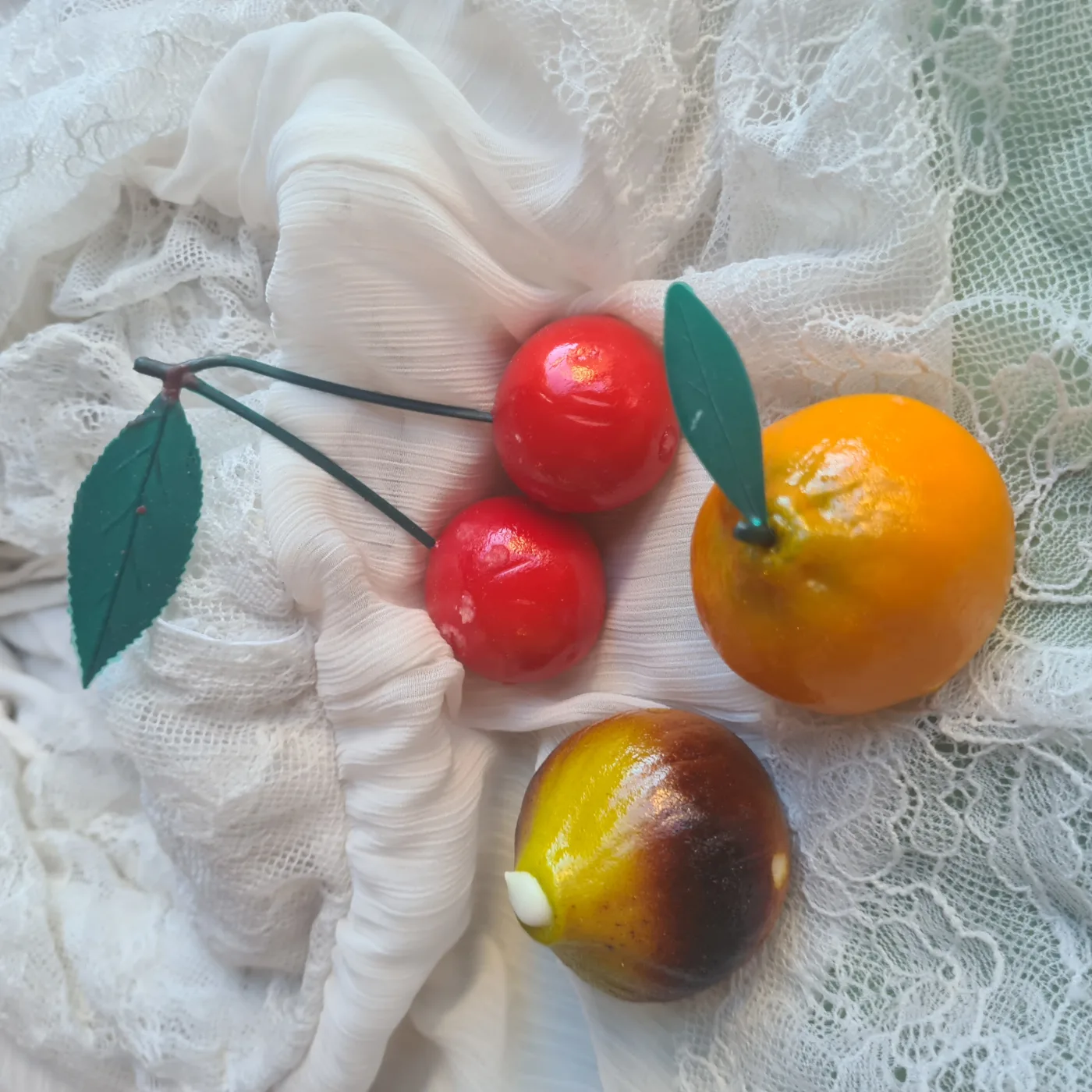
The first trick of marzipan is visual. Put a well-made piece of fruit-shaped marzipan beside a real orange or cherry, and the eye may spend a second trying to decide what it sees. The shine catches like skin. A tiny dimple suggests a stem. A leaf changes the scale of the whole object. Then the illusion breaks pleasantly at the bite: instead of juice, there is the close, warm flavor of almond and sugar.
That small moment explains why marzipan has lasted. It is not only a sweet paste or a cake covering. It is an edible material with enough body to be pressed, rolled, cut, painted, or tucked into another candy. It can be modest—a thumb-sized almond-shaped piece—or delightfully theatrical—a tray of miniature fruit that looks too perfect to touch. The useful way to approach it is not to ask whether it is “just” almond paste. Ask what it is trying to be today: a clean almond bite, a sculptural treat, a cake layer, or the soft center of a chocolate.
This is a guide to noticing those versions, serving them with a little care, and making a small tasting feel more like curiosity than a craft project.
Start with the almond, not the color
At its core, marzipan is an almond confection. The Food and Agriculture Organization’s food-category description defines marzipan as almond paste and sugar that may be shaped and colored for direct eating or used as a filling. That compact description is useful because it identifies the two jobs happening at once. Almond supplies flavor and natural richness; sugar supplies sweetness and structure. Together they make a paste that can hold a fingerprint or take a clean cut.
The best first taste is often the least decorated one. Choose a plain piece, or gently cut through a small filled chocolate to reach the center. Let it sit on the tongue for a second before chewing. A good marzipan does not need to announce itself with a strong artificial almond note. Its flavor can be nutty, floral, buttery, faintly bitter, or simply sweet, depending on the formula and flavoring. The texture should tell you just as much. Does it compress smoothly? Does it feel powdery? Does it melt into a paste, or does it break in a tidy, short way?
This is also where labels matter. “Marzipan,” “almond paste,” and “persipan” are not interchangeable names for a single experience. The German Confectionery Industry Association’s overview explains that marzipan’s raw mass is almond-rich, while persipan is a related, lower-cost product made from different kernels. You do not need to turn a candy break into a standards seminar; the practical point is simpler. Read the label if the almond flavor is the reason you picked the piece. A maker may be offering a dense almond character, a sweeter modeling paste, or a neighboring confection with a different personality.
Why it behaves like edible clay
Most candy wants to be eaten exactly as it comes. Hard candy wants to be sucked. Brittle wants to snap. Caramel wants to pull. Marzipan has an extra option: it can be handled. Its finely ground almonds and sugar form a compact paste instead of a syrup, foam, or glassy sheet. That gives it a calm, moldable quality. A finger press leaves a mark. A knife makes a soft edge. A small piece can become an oval, a pebble, or a very convincing strawberry with only a few gestures.
That is why marzipan appears in such different places. A confectioner can shape it into vegetables or animals, roll it into a thin layer over a celebratory cake, or enclose it in chocolate where the coating provides the first crack and the almond paste follows. One ingredient can play both decoration and filling without changing its basic idea.
The visual side is especially clear in Sicily’s frutta martorana: small marzipan sweets painted to resemble fruit and vegetables. Visit Sicily describes them as a traditional expression of Sicilian pastry craft and notes the stories surrounding their convent connection. It is better to hold those origin stories as tradition than as a precise documentary timeline. What is certain from the sweets themselves is the ambition: they are made to make you look twice. The stems, mottling, blush, and tiny imperfections are not wasted effort. They are the language that tells your eye, “this might be fruit.”
If you are serving marzipan fruit, preserve that reveal. Set out three or four pieces on a small plate, not in a crowded bowl. Let people look before they choose. The pause is part of the experience.
The difference between “realistic” and “good”
An impressive marzipan peach can still be a disappointing candy if it is dry, overly sweet, or scented only with color. Likewise, a plain little log can be excellent even if it makes no attempt to imitate anything. Separate the visual score from the eating score.
Try this three-part check:
- Look for a believable idea, not perfect camouflage. A dimpled orange, a pair of cherries, or a small pear works because it gives the eye a few clear clues. Too much gloss or too many painted details can make a piece look more like a prop than a treat.
- Notice the cut or bite. A fresh piece should look cohesive rather than cracked into dry crumbs. The surface may be smooth or lightly textured, but it should not feel like it has been sitting uncovered for ages.
- Wait for the almond finish. Sugar arrives first. The more interesting question is what stays after it: almond, rosewater, citrus, cocoa, spice, or nothing much at all. A distinctive finish is usually what makes a second piece appealing.
This check works for a chocolate-covered marzipan bar as well. First comes the shell, then the paste, then the almond flavor. Slow the bite down enough to tell whether those stages are distinct. The pleasure often comes from contrast: a thin snap outside and a soft, dense center inside.
Build a tiny marzipan tasting, not a giant dessert board
Marzipan is rich and concentrated. It earns more attention from a small flight than from a large spread. Three pieces are enough: one plain or lightly shaped marzipan, one chocolate-covered version, and one fruit-shaped piece or marzipan-filled pastry. If you cannot find all three, compare two formats and add a few plain almonds as a reference point.
Put the plain piece first. It gives you the baseline: sweetness, almond flavor, and texture without chocolate or decoration changing the story. Taste the covered piece next and ask whether the chocolate sharpens or softens the almond character. Save the sculpted fruit for last. By then you will know that the pear or cherry is not fruit at all, which makes the visual joke even better.
Water is the best reset. Coffee, tea, or a strongly flavored cordial can be lovely with dessert, but each can overwhelm a delicate almond note. If you do pour a drink, choose one that feels like a companion rather than a test: a mild black tea, a nutty coffee, or sparkling water with no heavy flavor added. The goal is not to “pair” every bite. It is to notice what the candy already does.
For a simple table card, use texture words instead of formal tasting language: soft, dense, smooth, short, chocolatey, almondy, floral. Guests can circle one or two. A short note is enough to turn “I liked that one” into a memory you can act on later.
Almonds can be the bridge, not an ingredient list
If a full tray of marzipan feels too sweet for your group, let almonds create a bridge to the rest of the plate. A few roasted almonds add a dry, crisp contrast to the smooth paste. Dark chocolate adds a different kind of contrast: bitterness and a clean break before the center yields. Pearls Candy & Nuts’ dark chocolate almonds are one simple way to add that second texture to a small almond-focused tasting.
Keep the pieces separate rather than mixing everything into one handful. A bite of marzipan followed by a chocolate almond is more revealing than a pile of both. You can notice the difference between almond as a ground, sweetened paste and almond as a roasted whole nut. They share a starting point but arrive very differently.
This is also an occasion to be clear about ingredients. Marzipan commonly contains almonds and can contain egg, flavorings, chocolate, or other allergens depending on the maker. Fruit-shaped versions may include colorings or decorative pieces that are not obvious from a glance. Check the current label or product page for each item, keep packaging nearby when you serve it, and offer a separate option to anyone who avoids nuts. Do not treat a beautiful display as a reason to make people guess what is in it.
A note on color: let it be part of the story
Marzipan can be ivory, pale gold, chocolate-brown, bright green, or the improbable red of a perfect candy cherry. Color changes expectation before the candy reaches your mouth. An uncolored piece suggests almonds and cakes. A citrus-yellow piece suggests fruit even when the flavor is mainly almond. A painted pear invites you to compare it with the real thing.
That is not trickery in a bad sense. It is a compact form of confectionery theater. The form makes the first promise; the taste gets to answer it. A marzipan orange does not need to taste exactly like orange to succeed. It only needs to make the almond flavor feel newly interesting by putting it in an unexpected shape.
When you choose pieces for a gift or a shared plate, one strong color family is usually more effective than every color at once. Try a little harvest group—pear, orange, chestnut-brown, and red cherry—or a winter group of pale fruits, dark chocolate, and a few green leaves. Leave open space on the plate. Marzipan has enough visual drama on its own.
Keep it fresh enough to stay tender
The thing that makes marzipan pleasant to shape also makes it vulnerable to being left out. Its surface can dry, and a cut piece can lose the supple texture that makes it satisfying. Follow the maker’s package guidance first. If you have opened a piece that needs to wait briefly for serving, protect it from air in a clean, food-safe container rather than leaving it on a counter as decoration.
Avoid refrigerating or freezing something just because it is candy. Chocolate coatings can bloom or pick up condensation when temperature changes are abrupt, and decorated marzipan may have details that do not enjoy extra handling. The package is the best guide for its particular formula. If you are making a small plate ahead of time, assemble it close to serving time and bring only what you expect people to enjoy. The rest can stay protected in its original packaging.
And give the pieces a moment at a comfortable room temperature before judging them. A very cold marzipan center can seem firmer and less aromatic. A few minutes can make the almond flavor easier to find and the texture less resistant. This is not a fussy ritual. It is the difference between tasting a candy and merely getting through it.
Let the illusion do its job
Marzipan rewards a different kind of attention from sour candy, brittle, or a chocolate bar. There is no dramatic crackle and no race to a flavor burst. The interest is slower: an almond becomes a paste; a paste becomes a fruit; a fruit becomes a small surprise when you bite it.
That makes it a good candy to serve when the table needs a conversation starter. Put out a few pieces, name the nuts clearly, and let people choose the object that makes them smile first. Someone will pick the pear because it looks almost real. Someone else will take the plain chocolate-covered piece because it promises a quieter pleasure. Both are getting the point. Marzipan is not asking to be the loudest candy on the plate. It is asking you to look twice, then taste the difference between an object and an idea.